Book Review
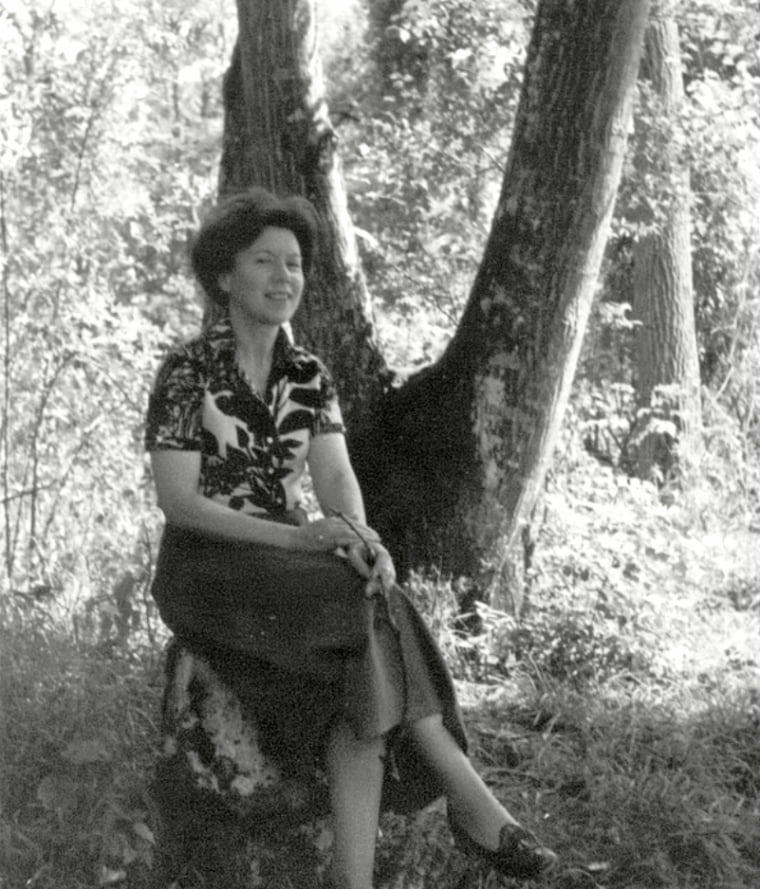
Nora Lange
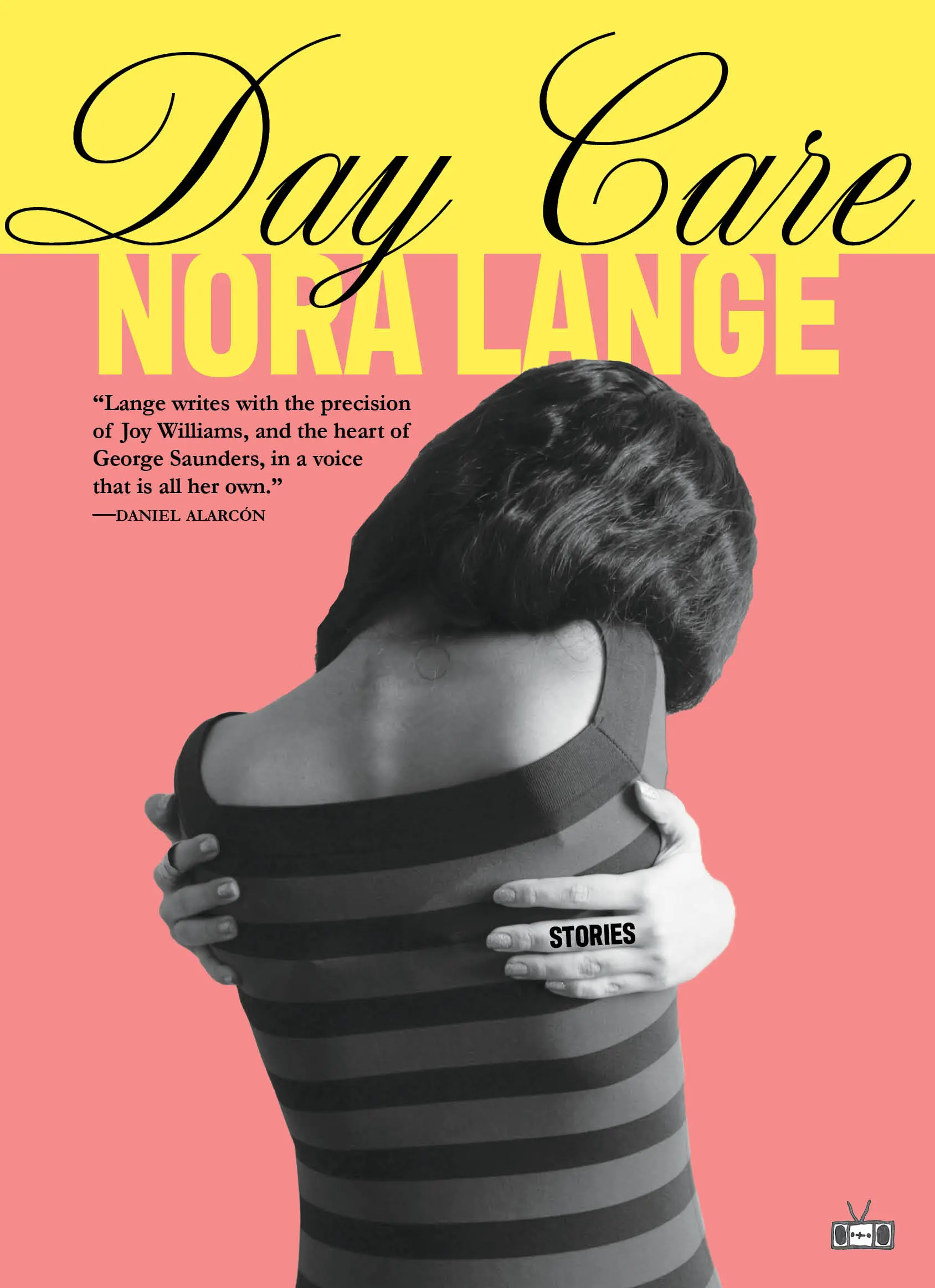
Day Care
A world where the very instance of a feeling or thought’s inception is also that of its expression, poses a problem for literary form—the challenge Nora Lange sets herself is how to pose, once more and with meaning, the same old unanswered questions.
In The Nineties, Chuck Klosterman suggests that, while Boomers, Gen-X, and millennials alike claim “ennui and alienation” as their specific generational experience, Gen X is associated with a distinct manner of expressing such ennui. For Gen X:
Self-righteous outrage was not considered cool, in an era when coolness counted for almost everything. […] The idea of policing morality or blaming strangers for the conditions of one’s own existence was perceived as overbearing and uncouth.
Day Care, Nora Lange’s first collection of short stories, is, as the blurb describes, “a biting reflection on economic precarity”. But its “bite” is tempered by the languid quality of Lange’s prose – specifically, by her quintessential Gen X lassitude. The collection’s subject matter (generalised disaffection with love, life, career prospects) and affect (a vaguely anti-social orientation) feel familiar to this millennial reader, but the tone in which both are expressed feels foreign: there is irony, performative detachment, searing self-awareness, yes—but also a distinct lack of anger. Lange’s yawning suppression of something like mania, something like neuroticism, into a placidly existential shrug is classic Gen X, and is on display, for instance, in ‘Letting Snails Go’, a story set during a twenty-year high school reunion where the narrator wistfully reproduces the graffiti scrawled in toilet cubicles:
Birdy eyed the sentiments etched on the bathroom stalls: Jenn loves John and John loves Jenn 4-reel & 4-eva!!! To the more complex, I finally brought my Sharpie to school, but I have nothing to say […] Is this reality? The question was etched on the bathroom stall but by who was unknown.
It is also evident in ‘Landfills’, where the narrator combines manic convictions like “We’ve an eye towards annihilation” with listless contemplations of whether “the issue with civilisation is that we blame everything but ourselves.” The collection’s sustained suspicion of capitalist structures, its not infrequent evocation of alienation as an era-defining affect and ethos, and its invocation of “Jell-O shots”, “Guess jeans”, “coupon clipping”, “aerobics”, orange-flavour “nutritional gummies”, and “sedans” – all of these features feel nineties-coded. Besides Gen X’s signature anti-establishment stance, however, there is another major reason for Lange’s alienation from the “normal” American existence lurking in the background of her stories: that existence’s essential masculinity.
In a review of Lange’s debut novel, Us Fools (2024), Noelle McManus remarks that the “dreary, Gummo-esque depictions of youth” meant to encapsulate “the freakish failed experiment that is America” typically feature male protagonists. But what is it like to grow up in such a perpetual display of Big Dick Energy, such a hothouse of testosterone-fuelled aspiration, as the USA when you’re a girl? More than anything else, this is the question underpinning Lange’s work. This is also, as gender studies scholars have elucidated, a question of particular salience at the turn-of-the-millennium. In the final decade of the twentieth century, the gains of second-wave feminism had secured Gen X women’s right to work and validated their expectations of career advancement; young women in particular were associated with the burgeoning creative economy and neoliberal entrenchment of this era. At the same time, advances in feminism were met with a counter-revolutionary backlash most obvious in the era’s punitive beauty standards and diet culture, and in the rampant misogyny characterising 1990s media and paparazzi practices.1
Lange is clearly well-versed in the gender politics in which she came of age. In an interview, she notes:
My mom is really intense, [a] beautiful wonderful person, but intense sometimes when she wants to be, like, when I turned – I don’t know how old I was – maybe eight, she gave me a cassette tape of Heart, the band… and she literally was like ‘this is important, happy birthday’, that kind of thing. Or [Adrienne Rich’s] Of Woman Born.
In Day Care’s title story, the narrator similarly receives “a cassette player of [her] own, and tapes of female rock bands such as Heart”, from a mother who muses: “While we don’t burn our witches anymore, we do everything but.” In the collection as a whole, however, most reminders of the “maternal line” are not so positive. In ‘Forks’, for instance, the narrator and her mother perform an ominous yearly inventory on the “collection of shiny matching objects” that will be the former’s “inheritance”. In ‘Last Boob Feed’, the newly postpartum narrator tells us: “My mother’s middle name became [the baby’s] first name. She gave it to me as a middle name, and most call me by both my first and middle… I have named this baby after my mother’s mother, my grandmother, who died when my mother was in her twenties and therefore was dead by the time I was born.” In ‘Encounter Beach’, two friends agree “that our mothers had never been taught to be happy.” And in ‘Letting Snails Go’, the learned performance of femininity is linked to “Batesian mimicry” – the natural phenomenon where, “in order to survive, an otherwise harmless organism must learn how to mimic a noxious predator.” These instances and others sustain the dull terror, centred on femininity, which pervades the collection.
In these examples, the burden of femininity is associated with the narrators’ mothers’ generation. But it is also specific to the contemporary moment and to the sense that, as the narrator of ‘Dog Star’ declares, we are living in a “glitchy histrionic era”. ‘Dog Star’ gestures to the (sur)reality in which women, especially in the US, are fast losing rights long assumed immutable. In today’s America, Trad wives and the resurgence of religious fundamentalism coexist with the unchanged expectation that girls are “expected to continue progressing, to pass through discrete units of time: infancy, adolescence, adulthood”. The society-wide breakdown of this “developmental progress” is also the disintegration of the social contract undergirding post-war American democracy. And, as the great American story of generational progress, self-improvement, and self-determination is increasingly shown to be “batshit”, many of Lange’s characters regress to frankly adolescent levels of dissociation.
In the collection’s title story, for instance, the narrator postpones joining her husband – who has moved to Utah, “signed a one-year lease on a rental without consulting her”, and now “eagerly, impatiently” awaits his wife and daughter – by seeking daytime sex via apps and eating “second breakfasts with gobs of nut butters without being monitored” while her employer is at the gym. “Days,” she muses, “pass carelessly” in this manner, such that her own mother takes the distinctly parental step of confiscating her smartphone and replacing it with “an old flip phone, presenting it to her like a puppy”. When the narrator’s boss finds out, she promptly produces a “refurbished iPhone 13” which is passed to the narrator along with membership of the boss’s “family plan”. In the collection’s opening story, ‘Heart Beats’, a dinner party’s worth of fully-grown cosmopolitan couples diffuse their minor marital spats over car parking techniques and childcare duties by playing Spin-the-Bottle on someone’s Blackberry.
There is a sense, then, that we might be dealing with adults in states of arrested development; a sense that life used, not so long ago, to be easier. This is the interim space of adolescence Lange describes in ‘Throwback’, whose narrator remembers her 1993 “Junior High” self as someone who assiduously affected disinterest by peppering her body with piercings and safety pins and “pretended to be older” with little understanding of what adulthood actually entailed. Writing about the sitcom Friends, Klosterman posits that:
When it debuted in 1994, the characters were all supposedly between the ages of twenty-four and twenty-seven, although they seemed slightly older. When the show concluded, they were all supposedly between the ages of thirty-four and thirty-seven but behaved like people slightly younger. In spirit, they were all eternally twenty-nine.
He goes on to suggest that this tactic was less about attracting a specific demographic of “twentysomething viewers” and more about finding a way of representing “generational concerns without directly recognising that generations exist”, of framing “the present moment” as “a timeless reality.”
In similar terms, it is hard to separate Day Care from the current wave of 1990s nostalgia pervading popular culture. I’m thinking here of the recent FX series Love Story, a dramatization of John F. Kennedy Jr’s romance with Carolyn Bessette, or TikTok’s #90s trend, a collection of shortform videos compiled of nineties-era red-carpet shots of contemporary celebrities such as Cameron Diaz, Jennifer Aniston, and Winona Ryder and synced to the Goo Goo Dolls’ 1998 hit, ‘Iris’. In such contexts, the nineties are positioned as altogether more simple, more economically and culturally prosperous, and more aesthetically-pleasing than the present; the decade is transfigured into a halcyon era of “ecstatic complacency” (to use Klosterman’s phrase) that is all the further removed from the present for being so recent.
Day Care, like Friends and like nostalgia itself, feels like one long teen age, where the specific economic, cultural, or political conditions of a moment are less important than its overall vibe. Lange’s is a narrative void of historical events or sensibility, and, in their absence, a sense of languorous familiarity floods the frontal cortex. In ‘Throwback’, for instance, when the narrator compares some misdemeanour of her own to Anthony Wiener “repeatedly snapping selfies fiddling with his penis”, she is told that her “news” is “outdated”; mentions of the 2016 election and the 2020 coronavirus pandemic are similarly more distracting than they are contextualising, and ultimately serve to heighten the ahistorical effects of the story’s overall mood. This kind of narrative lulling effect been used, highly effectively, by other contemporary American women writers, notably Ottessa Moshfegh and Rachel Kushner, who are similarly concerned with evoking the mood of what might be alternately termed 1990s Clintonian consensus or American imperial complacency through the eyes of young female characters and from the narrative remove of the present. And, like Moshfegh and Kushner in turn, Day Care reflexively treats its own nostalgic impulses as a symptom of a deeper problem.
‘Throwback’, in other words, is reflecting on its own inability to find narrative registers and formats for the current moment. The narrator does not so much narrativize her present as delineate her own inadequacy for such a task. In one particularly memorable instance, she has pitched the feminist magazine Jezebel a story on “‘Fear and Loathing at the Bridal Expo’”, borrowing from Hunter S. Thompson’s 1972 novel Fear and Loathing in Las Vegas. What she comes to realise, however, is that Thompson’s literary arsenal – his first-person perspectival journalism; his drug-, petrol-, and testosterone-fuelled send-up of the American Dream; his cynicism about whatever is apt to replace it – is ill-adapted to a contemporary moment that is, it seems, beyond irony. Witness this laboured passage:
Despite all the unwise decisions I’ve made, I found myself stuck between B‘rye’D & Groom, a mix of green apple infused rye, butterscotch tincture, key-lime juice, lime, and sour patch candy… And the Til Death Shots. Vials filled with blood orange vodka sold as the answer to the traditional ceremonial champagne toast. Tincture guy clarifies, ‘And guaranteed to take your wedding to a higher level.’
To this latter cliché, the narrator retorts: “Why not just light your guests on fire? Or blow your grandparents out of a festively decorated cannon?” If this sounds like a drunk person laughing uproariously at their own (bad) joke, I think it is meant to. We all know what a Jezebel article about contemporary bridal culture would read like: the inevitable combination of arch tone and faintly ridiculous topic-matter that is nevertheless overblown for narrative effect is perhaps why the magazine went out of business in 2023.
Regardless, the selection of a defunct publication for the story’s diegetic writerly platform indicates something of a vacuum for the type of historically-specific, feminist writing in which Lange is invested, as does the narrator’s nihilistic, derivative, and distinctly Thompson-esque “plan” for her own life:
To accumulate as much debt as possible, hire young people who know technology, take out as many loans as were available, procure as many credit cards under false names, aliases, in order to live like a radical, or just the high life, like some American bigshot, before offing myself.
To top it all off, ‘Throwback’ concludes with the “It Was All A Dream” chestnut – “Back at home, in bed, I feel seasick” – and with her recounting said dream to her husband: “You can’t make that shit up.” The point, here, is one whose implications the collection more generally weighs: We live in a world in which cliché rules the day; where what passes for reality would not pass muster as fiction. The fizzing ambiguity of nineties America – its ecstatic complacency but also its relentless coolness and irony – has succumbed to a culture stuck on the obvious. Hence, the narrator of ‘Chill Local Vacation’ is hilariously diagnosed with “pre-traumatic stress syndrome” for being debilitatingly attuned to other people’s emotions, while another character describes her annoyance that: “people exposed openly, without provocation, their feelings, whether online or on tee-shirts. And from what I’ve read, a vast number of Americans are currently at work on autobiographies.”
This is not to mention the frequency with which Day Care’s characters text each other while inhabiting the same room. Lange’s awareness that she is writing in and to a culture awash with derivative forms is indicated by Day Care’s many social media intertexts: in ‘Throwback’, “I send Naomi a text: Does he know what he sounds like? She takes my phone away”; in ‘Heart Beats’, “David was about to text Carol when Carol texted David, Stop texting me, David”; in ‘Chill Local Vacation’, “Some dudes in their van in the lane next to them were drilling on their horn. ‘JUSTINE – you get our text or WHAT?’ the dudes in the van yelled. […] Marco responded, increasingly upset that Justine had given out her number and that he had been reduced to competing with younger men in a van”.
This world, where the very instance of a feeling or thought’s inception is also that of its expression, poses a problem for literary form. In this context, the challenge Lange sets herself is how to pose, once more and with meaning, the same old unanswered questions. This challenge has gendered implications: in ‘Panel Vs. Board’, a woman writer of essays, short stories, and novellas struggles to shake the feeling that “the Great American Novel had already been defined and she had not been included in its definition.” It also has generational ones. In ‘The Craftsman’, a middle-aged academic couple are bemused by their younger neighbours’ total lack of irony:
It could have been their age, but they didn’t want to spoil the mood – they couldn’t believe people still went to Burning Man since it had become an expensive event for sellouts and soul-seekers. The man and woman couldn’t wrap their minds around the idea that Palm Springs had again become the embodiment of vacation, and that young people yearned to spend hours drifting blissfully by, splashing around in silky pools. We might be old, they conceded in the safety of their bed below. Palm Springs?
Here, the academics’ implied analytical and critical skills (it seems significant, in this regard, that they are both academics, dividing their time between judging their neighbours and “grading stacks of papers”) transpire to be singularly inadequate to the “riddle” with which their young neighbour presents them at the end of the story: “How was it that living in a consistently warm climate, in a place that prides itself on seasonal well-being, such as Los Angeles, I experience so much internal suffering?”
For her own part, if Lange does not answer the riddle herself, she at least finds multiple fresh ways of posing it. A conversation, in the Los Angeles Review of Books, between Lange and writer Katya Apekina raises the point of American cultural insularity: for the many Americans who have never left their home country, to enquire about their relationship to being “American” and living “in America” is to enquire after a fish’s relation to water. This is not a new point, but I do think it’s salient to Day Care’s form. If Us Fools has been hailed as a contemporary Great American Novel, Day Care uses short fiction’s fragmentary basis to parallel and enact the national project of keeping many covalent but contradictory impulses in one narrative place. If, as another reviewer has pointed out in relation to Us Fools, Lange’s writing sometimes suffers from “a lack of focus”, this is exactly what works in Day Care. The toddler-like attention span, the just-about-contained teenage impetuousness, the adult neuroticism – all bespeak a regression on the level of both meaning and societal cohesion in contemporary America. If I started this review noting Day Care’s ostensible lack of anger, I finish by reinstating this anger as that which the text – assiduously, painstakingly, and performatively – holds at bay. Like any American woman, Lange is all too aware that “Humanity [is] full of rage.”
Footnotes
-
See: Anita Harris, Future Girl: Young Women in the Twenty-First Century (Routledge, 2002); Susan Bordo, Unbearable Weight: Feminism, Western Culture, and the Body (University of California Press, 1993); Sheila Jeffreys, Beauty and Misogyny: Harmful Cultural Practices in the West (Routledge, 2005). ↩
If you enjoyed this article, please consider supporting our work. You can also subscribe to our newsletter here: